

First lines make a promise. From “Call me Ishmael” (Moby Dick, Herman Melville, 1851) to “Happy families are all alike; every unhappy family is unhappy in its own way.” (Anna Karenina, Leo Tolstoy, 1878). What first line drew you in so that it lingered in your memory? Did the book deliver on its promise?
In picture books, we make the same promise to our readers and listeners each time we write a new manuscript. With those few initial words, we invite them to enter the world we have crafted and care about the characters. Because picture books have only about 500 words, those first few are crucial!
Sara Kruger lists new books with memorable opening lines each month. (Sara Kruger - First Lines)
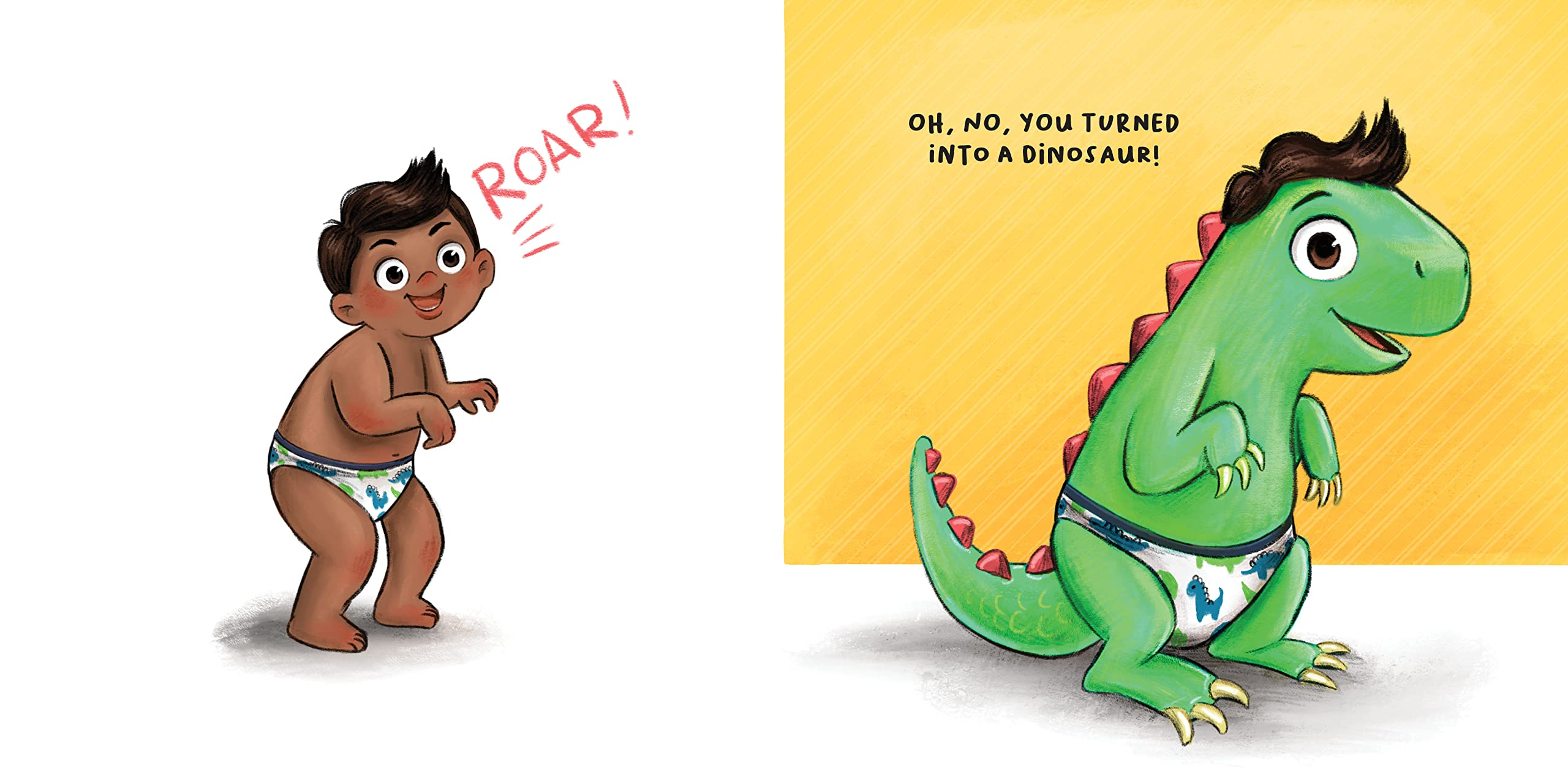
“ROAR! Oh, no, you turned into a dinosaur!” (How to Dress a Dinosaur, Robin Currie, illustrated by Alycia Pace, 2022).
“I can’t sleep! (Sleepy Sea, Bonnie Kelso, 2025).
“Thousands of years ago, unsuspecting ice age animals were drawn to shallow water… only to find oozing, oily stickiness.” (Stuck! The Story of La Brea Tar Pits, Joyce Uglow, art by Valerya Milovanova, 2025).
Agents and editors make decisions based on those first few words. Readers rushing through bookstores make buying decisions based on them. Make them the best possible!
Innovative. “The kids in Room 207 were misbehaving again. Spitballs stuck to the ceiling. Paper planes whizzing through the air. They were the worst-behaved class in the whole school.” (Miss Nelson is Missing, Harry G. Allard Jr., illustrated by James Marshall, Illustrator, 1977).
“Once upon a time…” is for fairy tale adaptations. First lines engage the reader with curious information that urges them on to page 2.
Immediate. "That Spot! He hasn't eaten his supper. Where can he be?" (Where's Spot? Eric Hill, 1980. )
Look over the first draft to find out where the action starts. Can anything before that point be woven into the manuscript later? Let the first line radiate the excitement to come.
Intriguing. “If you give a mouse a cookie, he's going to ask for a glass of milk.” (If You Give a Mouse a Cookie, Laura Numeroff, illustrated by Felicia Bond, 2015.)
The first line relates what is unique about the story. The best opening lines will connect directly to the last line. Problem solved!
Imaginative. “Horn went “Beep! Engine purred. Friendliest sounds you ever heard.” (Little Blue Truck, Alice Schertle, illustrated by Jill McElmurry, 2008.)
Every picture book word choice is honed to perfection, but the first words are the invitation into a new world.
Illustrative. “In the light of the moon, a little egg lay on a leaf.” (The Very Hungry Caterpillar, Eric Carle, 1981). The first line should need no art note. It should be so clear that an editor or agent can immediately get a mental image. And maybe fall in love!
Often, the finished first line will not be the first one you write in a rough draft, but ultimately the best one. Start…NOW!
Robin, I am honored to have STUCK! The Story of La Brea Tar Pits in your list of intriguing first lines. Thank you so much!
This was a wonderful reminder! Going to study all my mentor texts!!!